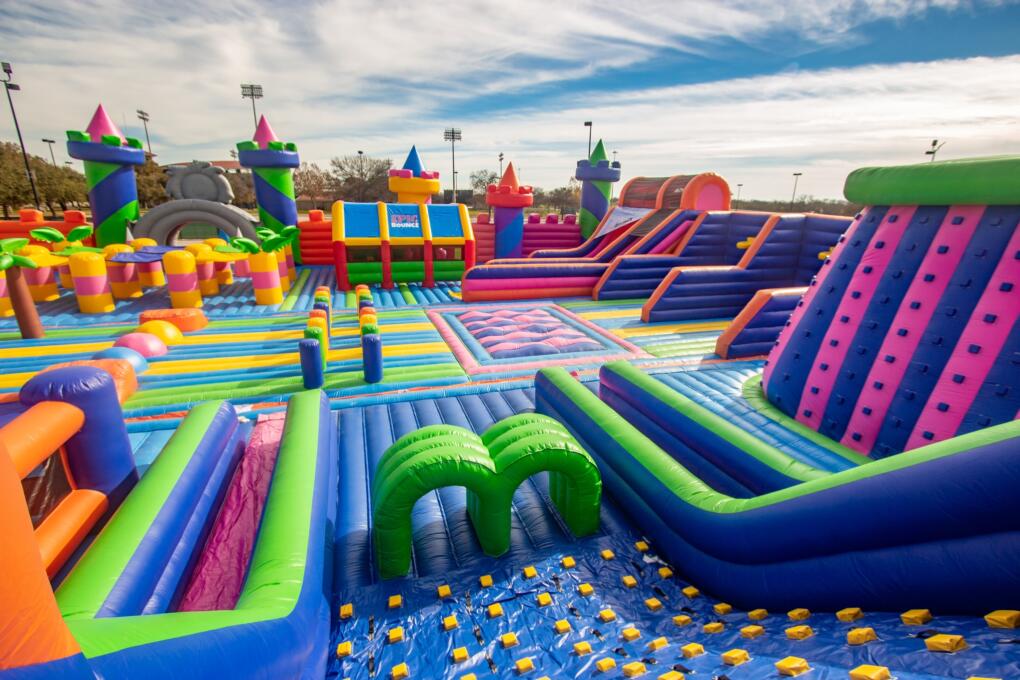
The inflatable bounce house industry is no longer just a niche entertainment sector—it’s a $3.1 billion global powerhouse. If you operate a party rental business in the US or manage wholesale distribution in Europe, understanding where this market is moving is the difference between scaling up and getting left behind.
With North America and Europe driving roughly 65% of global demand, the landscape is shifting rapidly. Here is a breakdown of the current data, regional differences, and the trends shaping the next three to five years.
North America vs. Europe: A Tale of Two Markets
The way inflatables are bought and sold depends entirely on where you are on the map.
North America: The Commercial Heavyweight
Valued at $1.95 billion, the US and Canada make up the largest market globally. The real engine here is the commercial B2B sector, which accounts for a massive 71% of revenue. This is driven by heavy-duty, commercial-grade PVC inflatables purchased by over 32,000 party rental and event companies.
When it comes to residential use (smaller nylon bouncers), North America is fiercely digital. E-commerce platforms and brand-owned websites control 68% of sales, making a direct-to-consumer (DTC) approach highly lucrative for summer seasonal spikes.
Europe: The Compliance-Driven Wholesale Hub
The European market (valued at $1.14 billion) tells a very different story. The barrier to entry here is high due to strict CE and REACH regulations. This compliance premium pushes the average cost per unit higher than in the US.
Unlike the digital-first American market, Europe relies heavily on traditional offline networks. Local import wholesalers and regional distributors control nearly half (48%) of the market. Breaking into Europe requires either partnering with these established distributors or maintaining a flawless compliance record.
Where is the Industry Heading? (Next 3-5 Years)
Consumer tastes are maturing, and operators are looking for better returns on investment. Expect these major shifts:
For Commercial Rentals (B2B): The standard primary-colored castle is losing ground. We are seeing a massive shift toward modular obstacle courses, adult-friendly designs, and thematic IP. More importantly, rental operators are demanding lighter, high-tensile composite materials to reduce the physical strain and labor costs associated with delivery and setup.
For Residential (B2C): Aesthetics are taking over. The viral success of pure white "wedding bouncers" and pastel-toned indoor inflatables proves buyers want products that look great on social media. For outdoor summer products, hybrid water-slide park setups are completely replacing basic jumpers.
Smart Equipment: The inflatable itself is low-tech, but the accessories aren't. There is a growing demand for smart, variable-frequency blowers that are energy-efficient and operate at lower decibels for indoor use.
The Global Supply Chain Shift
It’s an industry fact that roughly 85% of global inflatable inventory is manufactured in China. However, the traditional sourcing model is changing.
Multi-tiered importing is quickly giving way to a global online B2B strategy. Commercial buyers and rental fleets are bypassing middlemen to source directly from factory-backed independent sites. This shift offers buyers better transparency, custom OEM/OBM capabilities, and significant cost savings. The manufacturers that will win the next decade are those transitioning from basic production to offering eco-friendly materials (like non-toxic TPU), robust compliance, and localized after-sales support.
The Bottom Line
The global inflatable market is evolving from basic manufacturing to a highly branded, quality-driven industry. Whether you are upgrading your rental fleet, expanding your retail catalog, or looking for a reliable manufacturing partner, aligning your sourcing strategy with these material and compliance trends is your best path to growth.